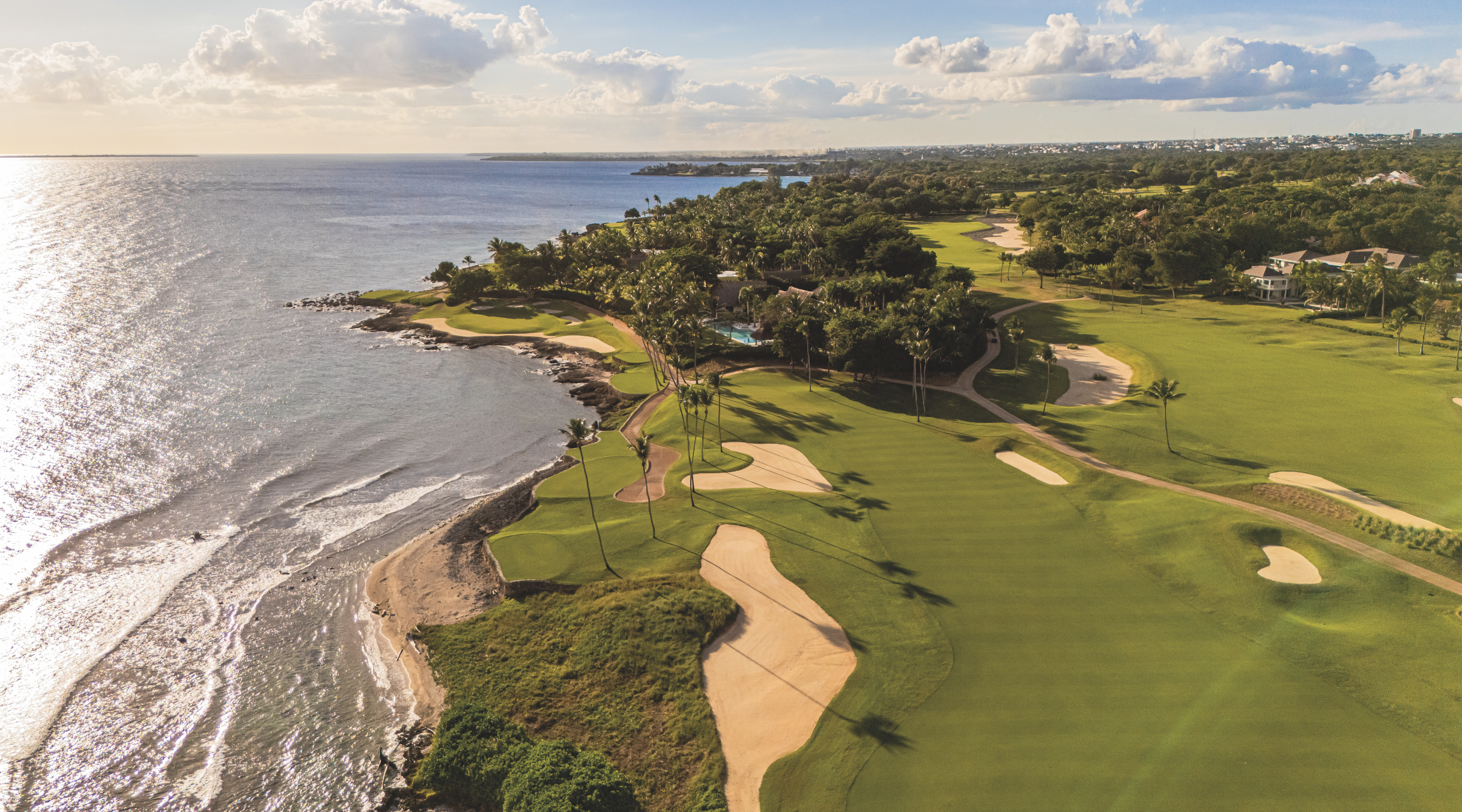
Pete Dye arrived on the southeastern coast of the Dominican Republic in the late 1960s with an instinct that most architects never get to act on: the feeling that a piece of land is simply asking to become a golf course. The limestone shelf jutting into the Caribbean Sea at La Romana did not need much persuasion. When Teeth of the Dog opened in 1971, it announced itself not as a resort amenity but as a genuine work of art, a routing so faithful to the land that the sea itself felt like a co-designer. More than fifty years later, the course has returned from a year-long restoration, and the question worth asking is not whether it has changed, but whether anything this elemental can truly be altered.
The $15 million project, led by Jerry Pate Design, was built around a single directive: preserve Pete Dye's 1971 design while updating the course for modern play and the punishing realities of coastal conditions.
That framing matters.
The restoration had a clear mandate to return the course as closely as possible to Dye's original vision, and that meant a complete rebuild, not a surface refresh.
Greens, bunkers, tees, and fairways were rebuilt or reshaped, and drainage and irrigation systems were replaced with modern infrastructure.
The course was entirely re-grassed using Dynasty Paspalum, a variety selected specifically for coastal conditions, ensuring durability against salt air and wind.
The goal, as one account put it neatly, was precision rather than reinvention.
The man entrusted with that precision carries his own thread of history back to this very place.
Jerry Pate, the 1976 U.S. Open and 1982 Players champion, led the American team to victory at the 1974 World Amateur Team Championship held at Teeth of the Dog, striking up a friendship with Dye that week and building ties to the resort that would eventually earn him the role of design caretaker.
There is something quietly moving about that continuity: a man who first walked these fairways as a young champion returning decades later to rebuild them by hand, guided by memory as much as engineering.
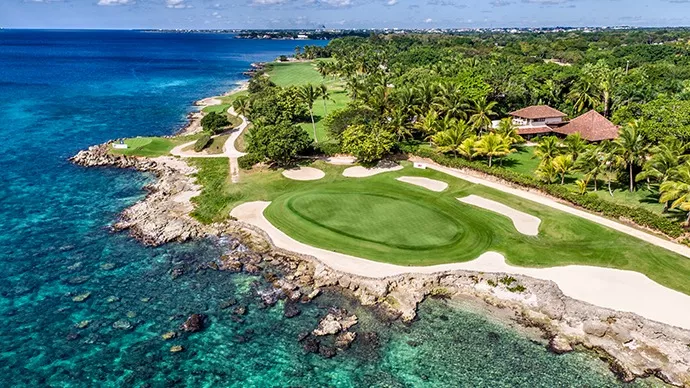
Dye's design hallmarks are all present on the dramatic seaside layout: railroad ties, vast waste areas, peninsula greens and tees, hand-sculpted putting surfaces, and a unique assortment of pot bunkers.

Seven holes play directly along the Caribbean, close enough that a thin drive can find salt water as easily as sand. The wind is not an afterthought here; it is a playing partner, unscheduled and unreliable, arriving from the southeast with the kind of authority that makes club selection feel almost philosophical.
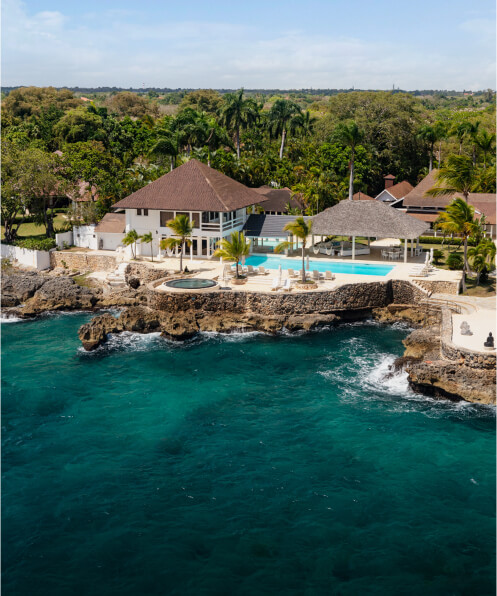
The resort surrounding the course adds a layer of cultural texture that pure golf destinations rarely offer. The village of Altos de Chavon, perched above the Chavon River on the resort property, is a hand-built replica of a 16th-century Mediterranean settlement, complete with cobblestone streets, an amphitheater where Frank Sinatra once performed at its inauguration, and artisan studios that have been active for decades. Walking those streets the evening after a round on the Dog is not a consolation prize for the golf; it is the other half of the experience, a reminder that the best golf travel has always been about the place as much as the course.
The official grand reopening ceremony took place on March 13, 2026, with Dominican President Luis Abinader, resort leaders, and government officials in attendance, which tells you something about what this course means to the country beyond scorecard statistics.
Resort president Andrés Pichardo Rosenberg framed the restoration as "a commitment to excellence and to preserving the legacy of Pete Dye for future generations."
That is the language of stewardship, and stewardship is exactly what a course like this deserves.
Teeth of the Dog was never really a place you visited to check a ranking off a list. It was always a place you went to understand why certain golf courses become inseparable from their landscapes.
That is what makes this restoration feel significant. Fifteen million dollars can rebuild greens, replace irrigation, reshape bunkers and strengthen a course against another half-century of Caribbean weather. What it cannot manufacture is the thing Dye recognized when he first arrived here.
Seven holes pressed against the sea. Limestone beneath your feet. Trade winds changing the question after the ball is already in the air.
Pate's achievement was understanding that none of that needed improving.
More than fifty years after Dye first carved Teeth of the Dog from the Dominican coastline, the course has been rebuilt almost completely and, somehow, remains essentially what it always was.
The land still gets the last word.
https://www.casadecampo.com.do/golf/teeth-of-the-dog/