There is a particular kind of restraint that separates a well-made garment from everything else hanging in the pro shop, and it has nothing to do with moisture-wicking percentages or UV protection ratings. It is quieter than that. It lives in the weight of a fabric, the way a collar sits, the small decision. Hidden from most eyes, meaningful to the wearer, to tuck a tee slot behind a chest pocket rather than leaving it out in the open like a billboard.
That sensibility is exactly what Rob Junge had in mind when he founded Agronomy Workshop in San Francisco in 2025, and it is exactly why the brand deserves your attention now, while it is still small enough to feel like a discovery.
Junge comes to golf apparel as a designer, not a merchandiser, and the difference is written into every choice the brand has made so far.
Agronomy Workshop entered the world with a mission to bring a sense of true craft and functionality back to golf apparel. A sentence that sounds simple until you consider how thoroughly the industry had abandoned that ground. The dominant story in golf clothing for the past two decades has been a story of performance fabric, of synthetic stretch panels and heat-sealed seams and every manner of petroleum-derived textile dressed up in the language of innovation.
Natural materials have almost completely been replaced by plastics and polyester in golf; cotton can be soft, durable, and breathable, yet synthetic materials have become the de facto choice.
Agronomy Workshop is, among other things, a refusal to accept that outcome as inevitable.

The anchor of the current range is the brand's heavyweight cotton mock neck work shirt, and it rewards attention. It is a hundred-percent cotton heavyweight long-sleeve mock neck with cotton rib for the collar and wrist cuffs. Construction details that recall workwear traditions more than they do anything you would find on a Tour pro's back.
The chest pocket conceals a hidden tee holder that holds up to three tees, and the hem is slightly curved to make tucking easier. That last detail matters more than it sounds. A slightly curved hem is the kind of thing a tailor thinks about and a production team talks a brand out of, because it costs more to cut and it will never appear in a product description on a big-box website. Agronomy Workshop did it anyway.
A tonal logo embroidery on the back completes the picture. Present but not insistent, the way a good signature should be.
The hat follows the same philosophy with equal conviction.
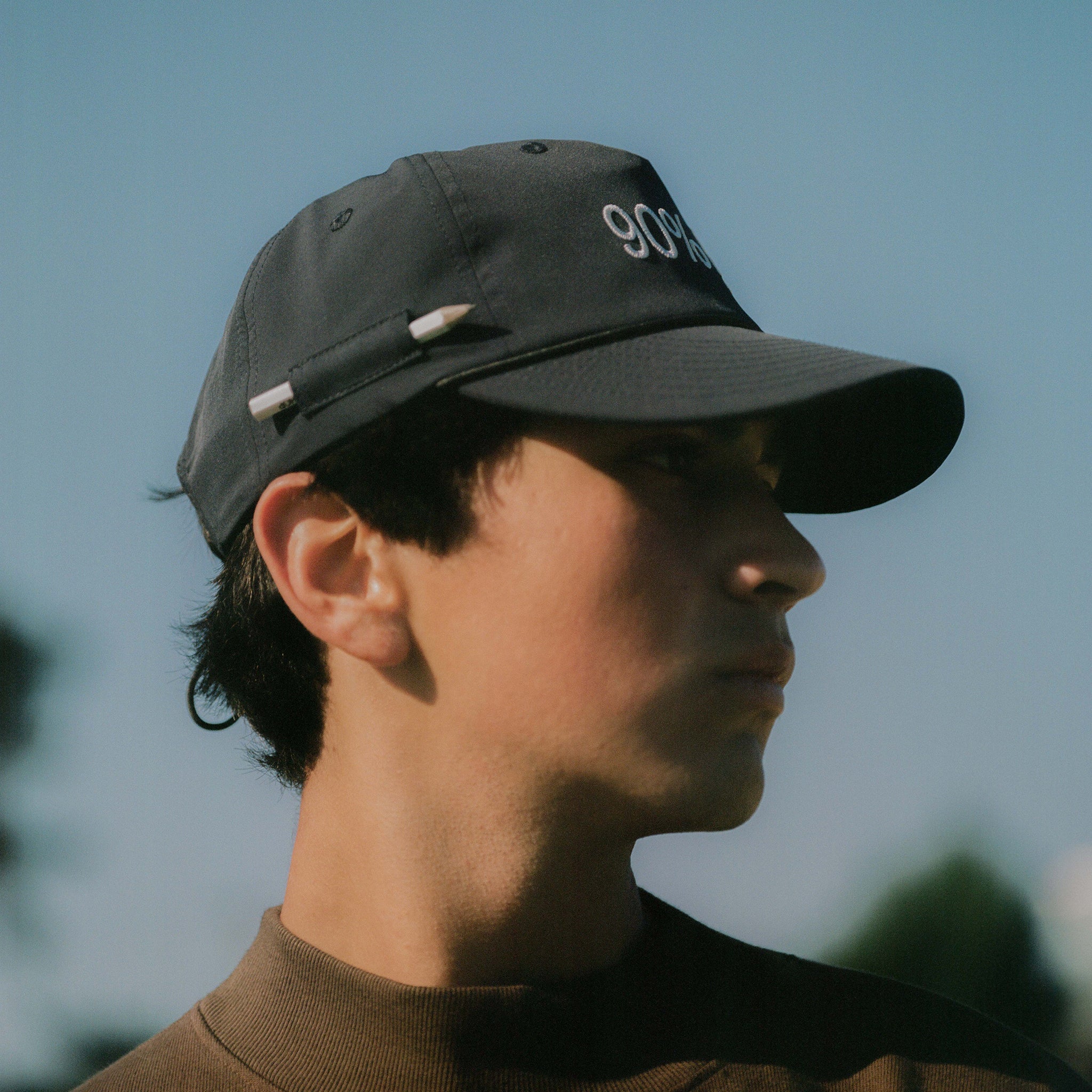
It is a five-panel rope hat made from a hundred-percent recycled nylon, with a quick-adjust rope closure, matching rope along the front of the base panel, and a golf pencil holder built in. Again: the pencil holder. The tee slot. These are not novelty features engineered for a product launch video. They are the kind of details that make you feel, standing on the first tee, that someone thought about you specifically, about the actual ritual of playing golf rather than the abstract concept of it.
The brand's ethos is perhaps best captured in a line from its own website that reads almost like a design brief made public:
"making life-long products for a life-long sport."
That is a different promise from what most golf labels are making. It is a promise about longevity and material integrity rather than seasonal obsolescence, about clothing that earns a permanent place in the rotation rather than cycling out when next year's colorway arrives.
What Junge has built so far is deliberately small.
The range consists of the signature heavyweight cotton mock neck work shirt, a towel, and a cap...a capsule, really, the kind of tight edit that forces each piece to carry real weight. There is an argument to be made that this scarcity is itself a statement, a pointed contrast to the category's habit of launching with a hundred SKUs and hoping something lands.
Well, they've landed. And the golf world is taking notice.
https://agronomywork.shop/